
I Thought I Had Tried Everything — Then I Found a Natural Way to Target DHT and Help My Hair Grow Back
Biotin, oils and expensive shampoos had all left me disappointed. This scalp-first method finally focused on what was weakening my hair beneath the surface—not just the thinning I was trying to hide.
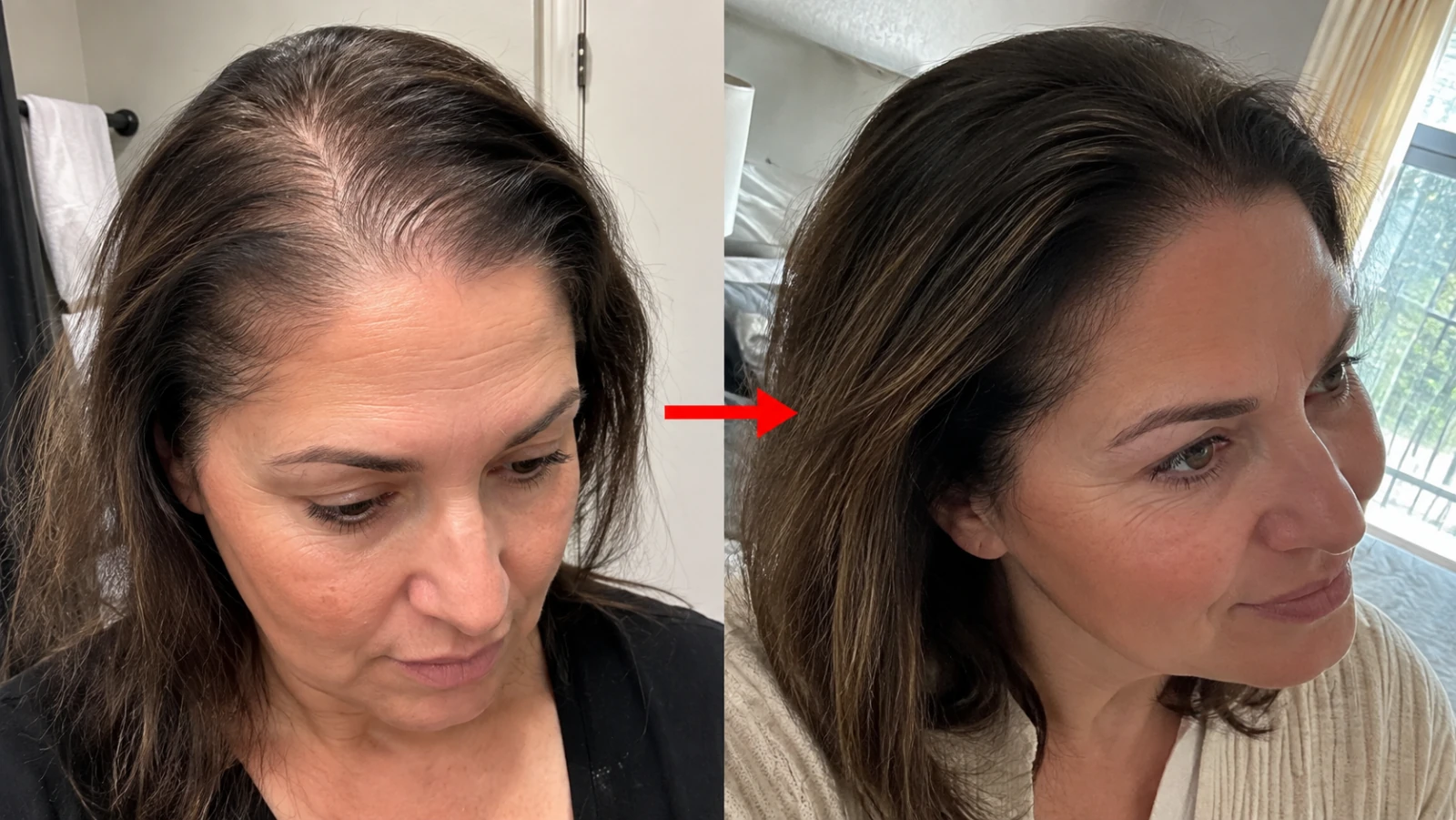
I still remember the morning I looked down at my hairbrush and felt my stomach drop.
There was more hair tangled between the bristles than I had ever seen before.
For months, I had been telling myself it was temporary.
Maybe it was stress.
Maybe it was the hormonal changes after having children.
Maybe it was all the coloring and heat styling I had done over the years.
Or maybe this was simply what happened as I got closer to 40.
But the changes were becoming harder to dismiss.
My part looked wider under the bathroom light.
My ponytail felt smaller in my hand.
The hair around my temples looked finer, and styles that once appeared full and effortless suddenly required powders, sprays and careful positioning.
Every shower left me staring at the drain.
Every photograph made me check the top of my head before looking at anything else.
The hardest part was not the hair I had already lost.
It was wondering whether the thinning would ever stop.
The Morning I Realized My Hair Wasn’t Going to Stop Thinning on Its Own
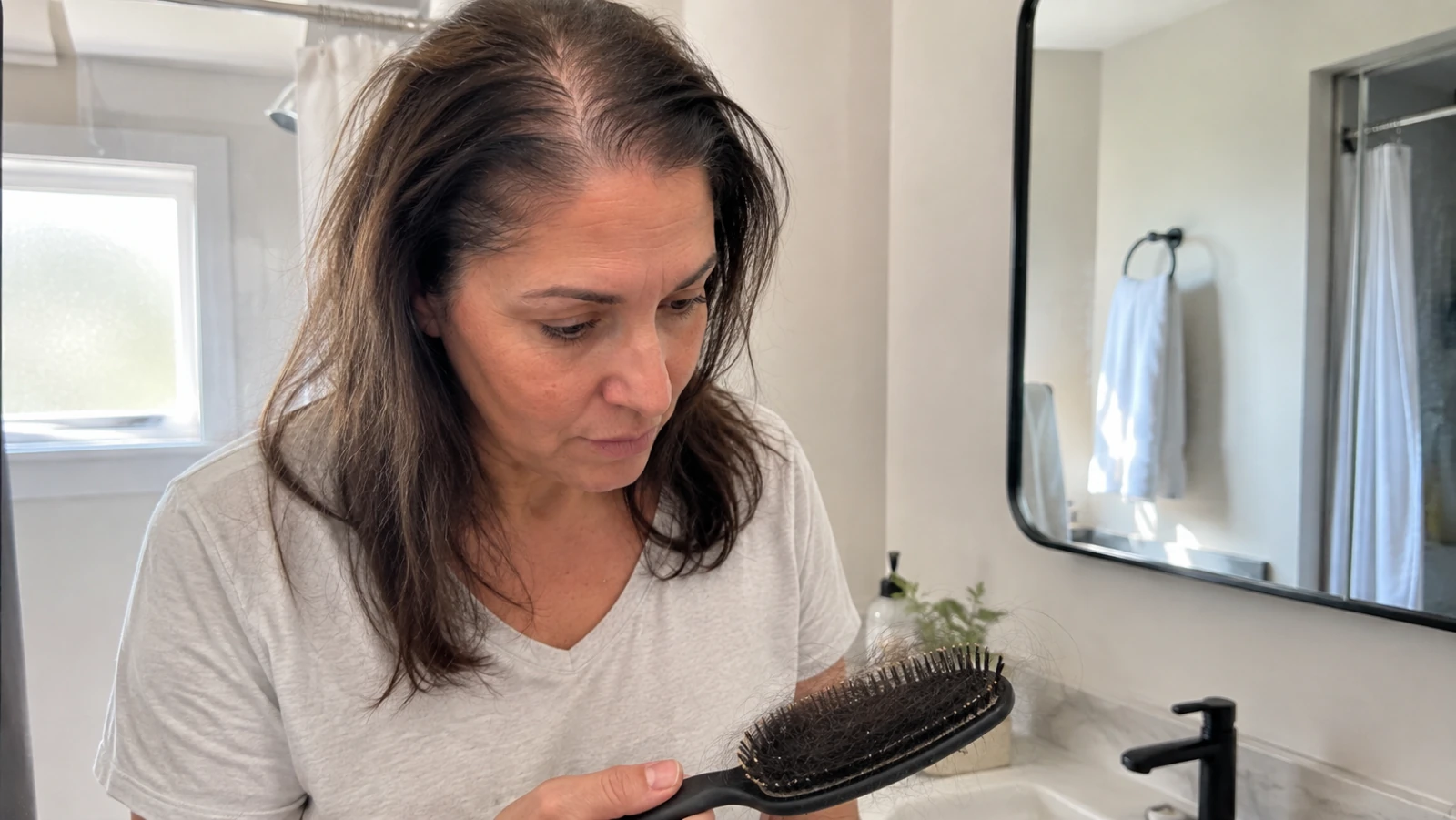
Everyone loses some hair during brushing and washing.
That is what I kept telling myself.
But this felt different.
There were strands on my pillow when I woke up.
Hair wrapped around my fingers whenever I washed it.
More and more scalp became visible along my part, especially under bright overhead lighting.
I started changing the way I wore my hair.
Instead of choosing styles I liked, I chose styles that hid the areas that worried me most.
I stopped wearing my hair pulled back because the thinning around my temples felt too noticeable.
I used root powder before going out.
I avoided standing directly beneath bright lights.
I even began checking the back and top of my head from several angles before leaving home.
Eventually, I had to admit what I had been trying not to face:
My hair was getting thinner, and waiting was not making it better.
I Blamed Stress, Hormones and Getting Older
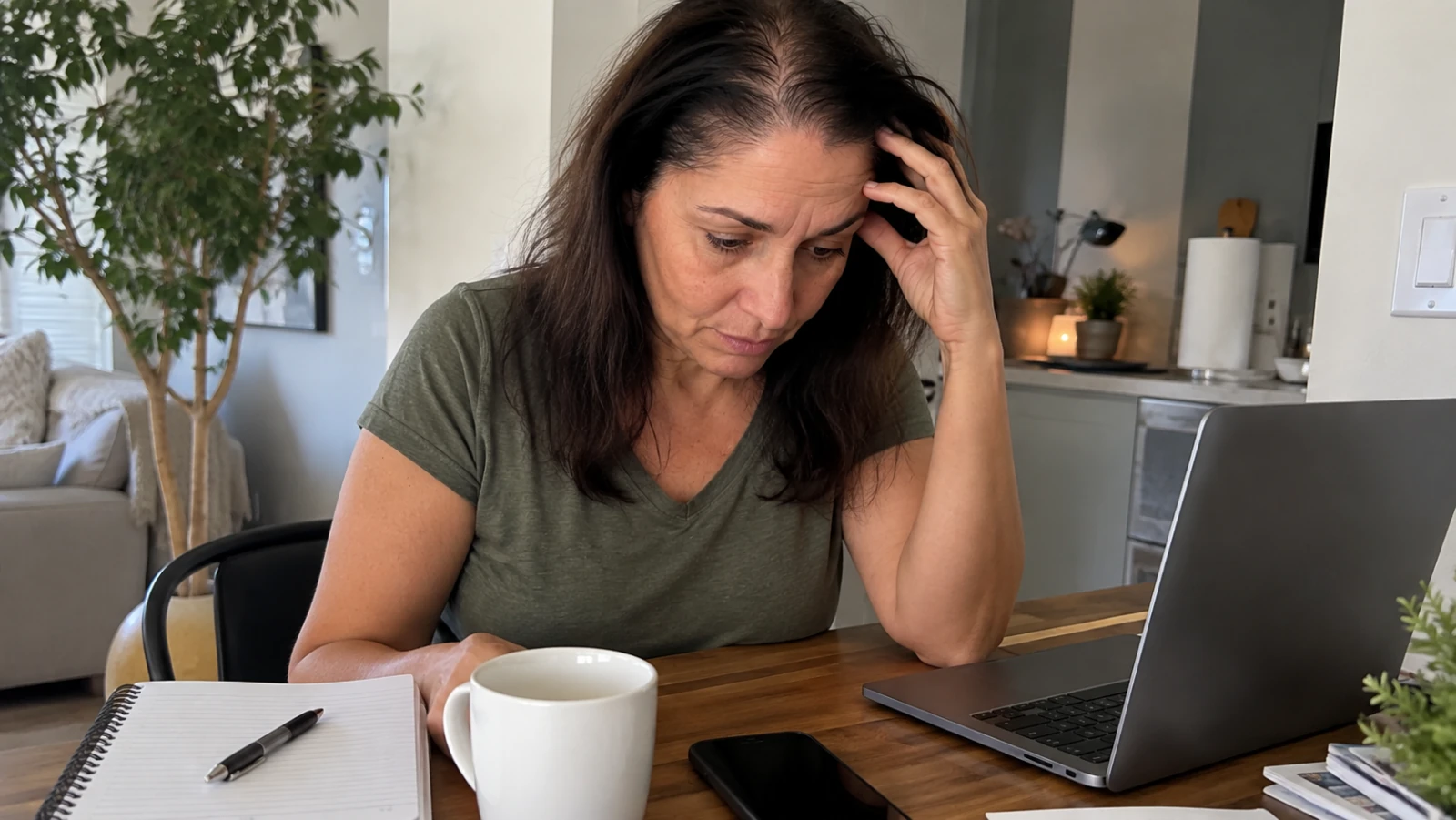
Like many women, I had plenty of possible explanations.
I had experienced stressful periods.
My hormones had changed over the years.
I had colored, straightened and blow-dried my hair more times than I could count.
And as I approached 40, I wondered whether thinning hair was simply another sign of aging that I had to accept.
I blamed myself, too.
Had I damaged my hair?
Was I missing an important vitamin?
Had I waited too long to take the problem seriously?
The more I searched, the more confusing everything became.
One article blamed stress.
Another blamed genetics.
Another said I needed more protein, iron or biotin.
I did not know which explanation applied to me.
I only knew that I wanted the shedding to slow down before the thinning became even harder to hide.
I Tried Everything People Said Was Supposed to Work
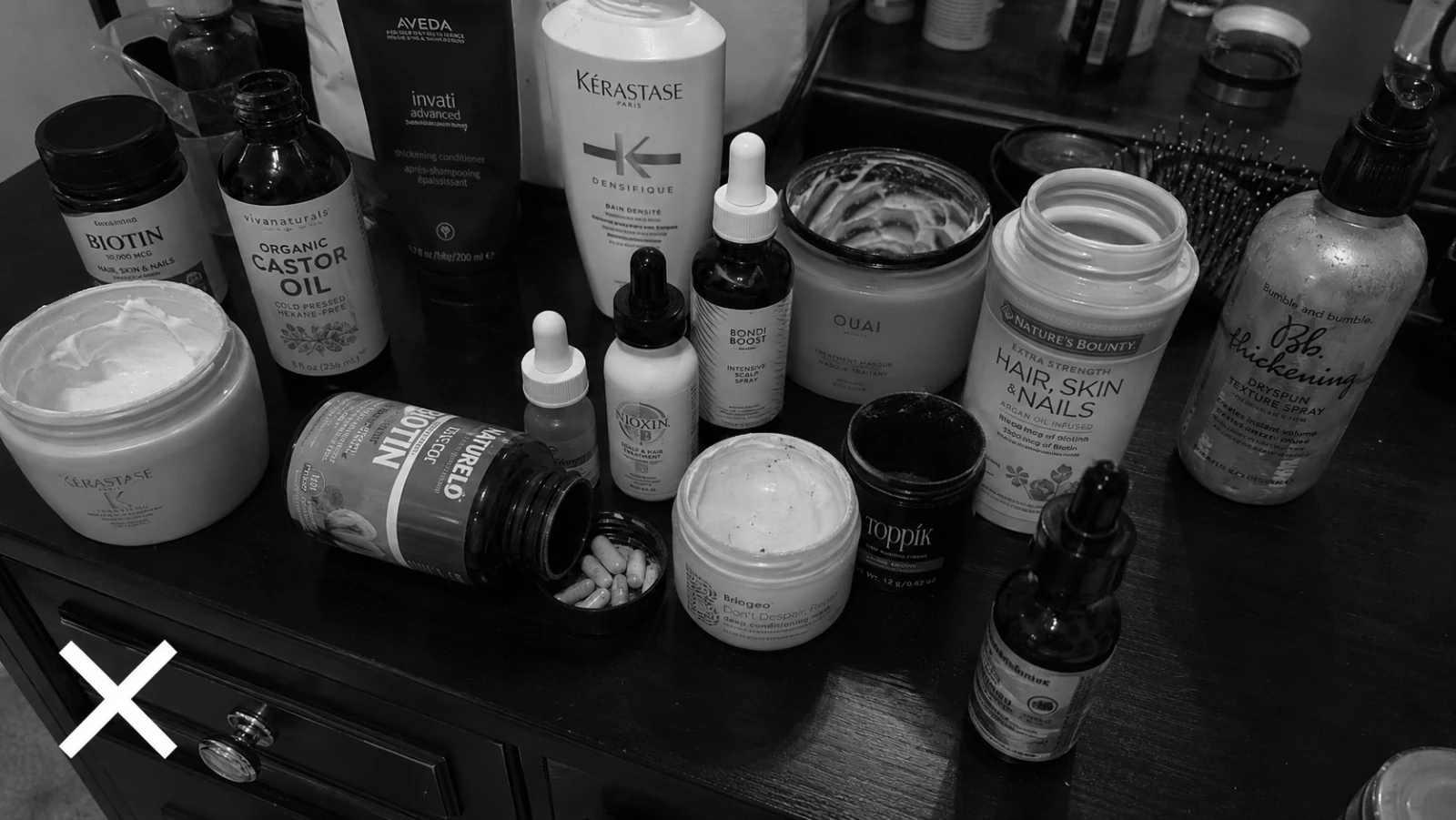
I started with biotin supplements.
Biotin appeared in almost every article and every list of recommended hair-growth ingredients, so I took it consistently and waited.
Then I tried castor oil.
I massaged it into my scalp because beauty blogs described it as a miracle for thicker hair.
It was heavy and messy, but I kept using it because I wanted to believe it was helping.
I changed shampoos several times.
Some promised volume.
Others claimed to strengthen fragile hair or reduce breakage.
I bought masks, serums, scalp oils and expensive salon products.
Some made my existing hair softer.
Others created temporary lift at the roots.
But after washing and styling, the same problem remained.
My part still looked wider.
My ponytail still felt smaller.
And the hair in my brush and shower kept increasing.
Each failed product made the next promise more difficult to believe.
I began wondering whether anything could make a real difference—or whether I was simply delaying the inevitable.
What I Learned About DHT Changed Everything
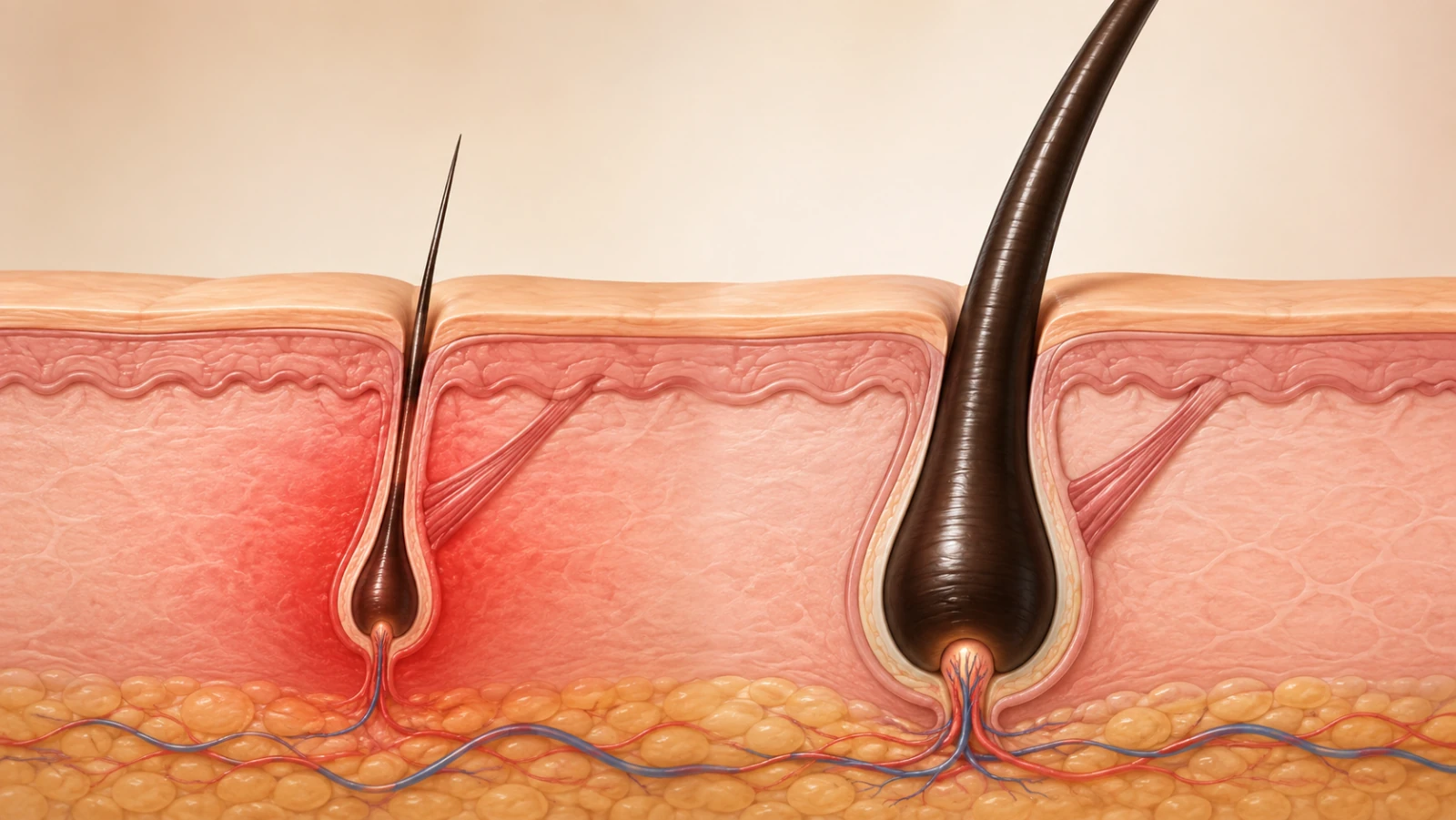
Late one night, I began reading about what can happen beneath the visible strands.
That was when I first learned about DHT, short for dihydrotestosterone.
DHT is a naturally occurring hormone found in both men and women.
In people whose follicles are sensitive to it, DHT can affect the natural hair-growth cycle and contribute to a gradual process in which the follicles produce finer, weaker strands.
Over time, each new strand may grow back thinner than the one before it.
That can make the part look wider, the temples appear less full and the ponytail feel smaller—even though hair is still technically growing.
Suddenly, the changes I had been seeing made more sense.
I had been blaming stress, age and styling damage.
Those factors may have played a role, but I had never considered that something could be affecting the follicles beneath the surface.
More importantly, I realized that almost everything I had tried focused on the hair I could already see.
Very little of it was designed to address what was happening directly at the scalp.
Why Biotin, Oils and Expensive Shampoos Had Let Me Down
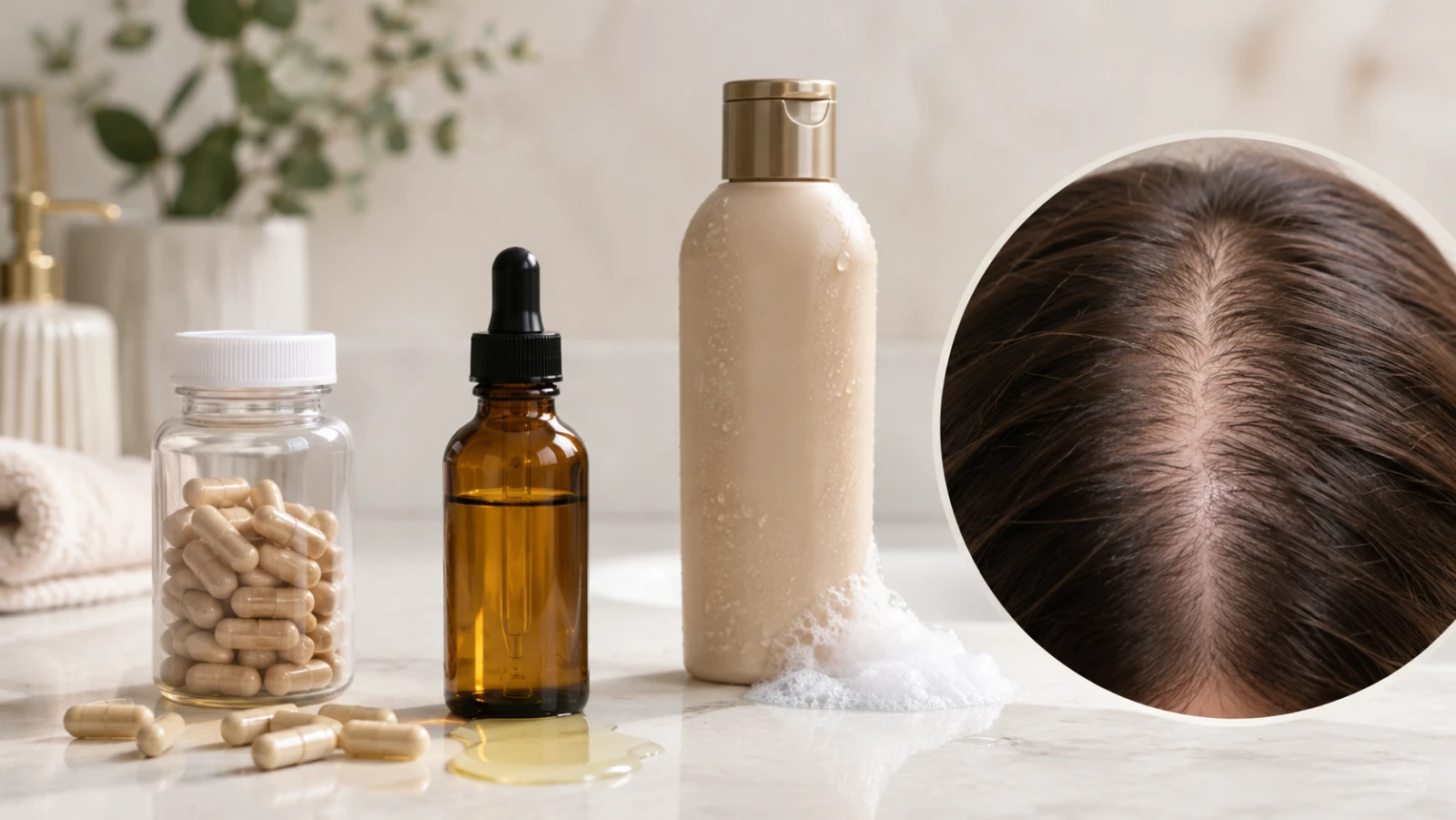
The problem was not that every product I tried was completely useless.
The problem was that each one had a limited role.
Shampoo cleans the hair and scalp, but it is rinsed away within minutes.
Conditioners and masks mainly coat the lengths and ends.
Volumizing sprays lift the roots temporarily.
Hair fibers and root powders make sparse areas look less noticeable until the next wash.
Heavy oils may condition the scalp, but they can also leave fine hair looking flatter and greasier.
Even oral biotin may not provide the answer women expect when thinning involves more than a simple deficiency.
I finally understood why I felt as though I had been doing everything right while continuing to lose ground.
I had been treating the visible hair.
I had not been using a consistent method designed to target the scalp, address the effects associated with DHT-sensitive follicles and support new growth where my hair looked thinner.
The Natural Scalp-First Method I Had Never Tried
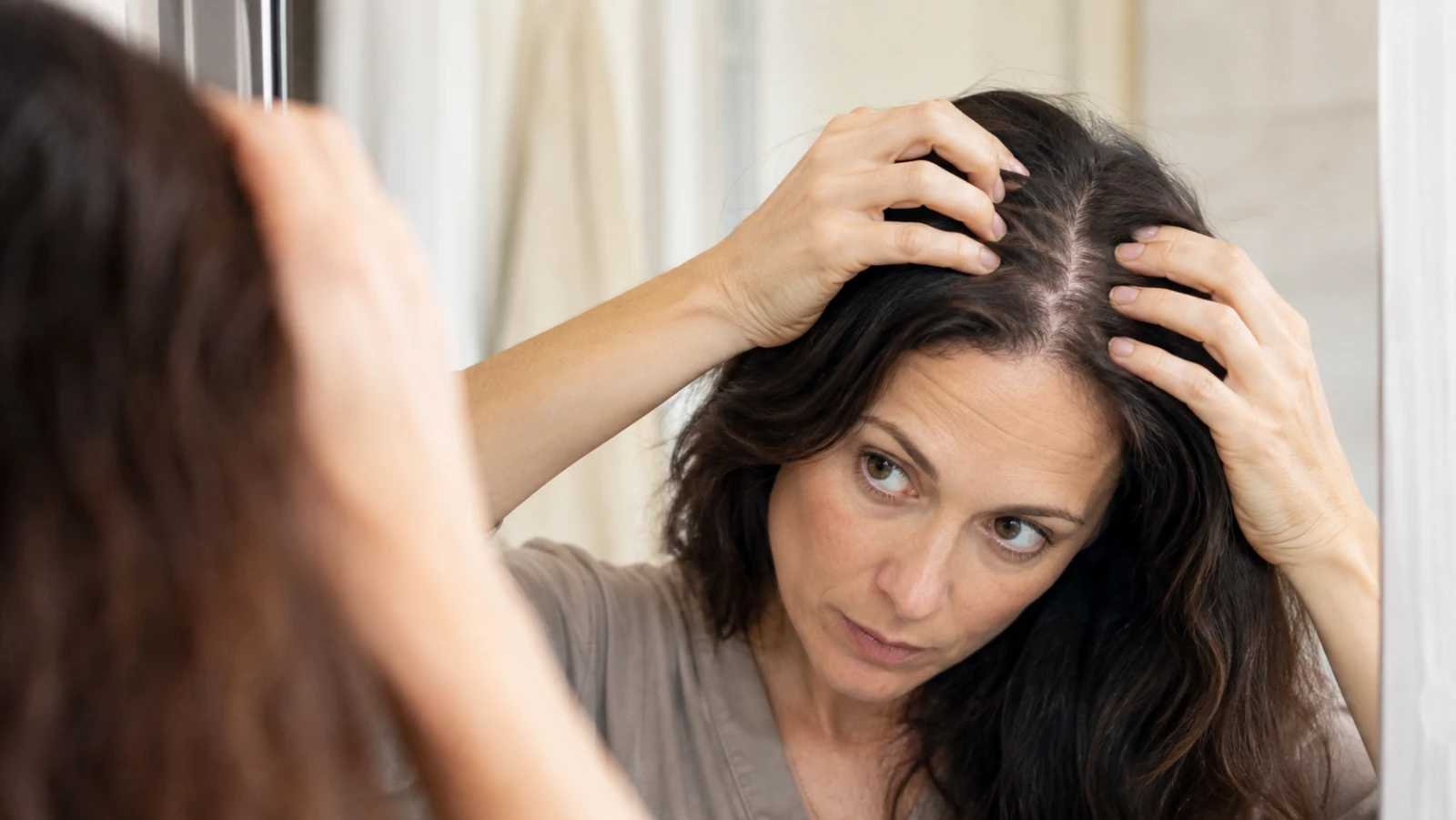
Once I understood the role of the scalp, the idea of topical application made far more sense.
Instead of swallowing another supplement and hoping its ingredients reached the areas that concerned me, I could apply a formula directly around my temples, part and crown.
I also wanted something natural and gentle enough to use consistently.
I was not interested in another harsh or complicated treatment.
I did not want a heavy oil that made my hair look greasy.
And I did not want a product that only disguised the thinning for a few hours.
I wanted a simple daily method with a clear purpose:
- Target the effects of DHT at the scalp
- Help slow excessive shedding
- Support visible new hair growth
- Help thinning areas look fuller over time
That was when I discovered Rootara.
That’s When I Discovered Rootara
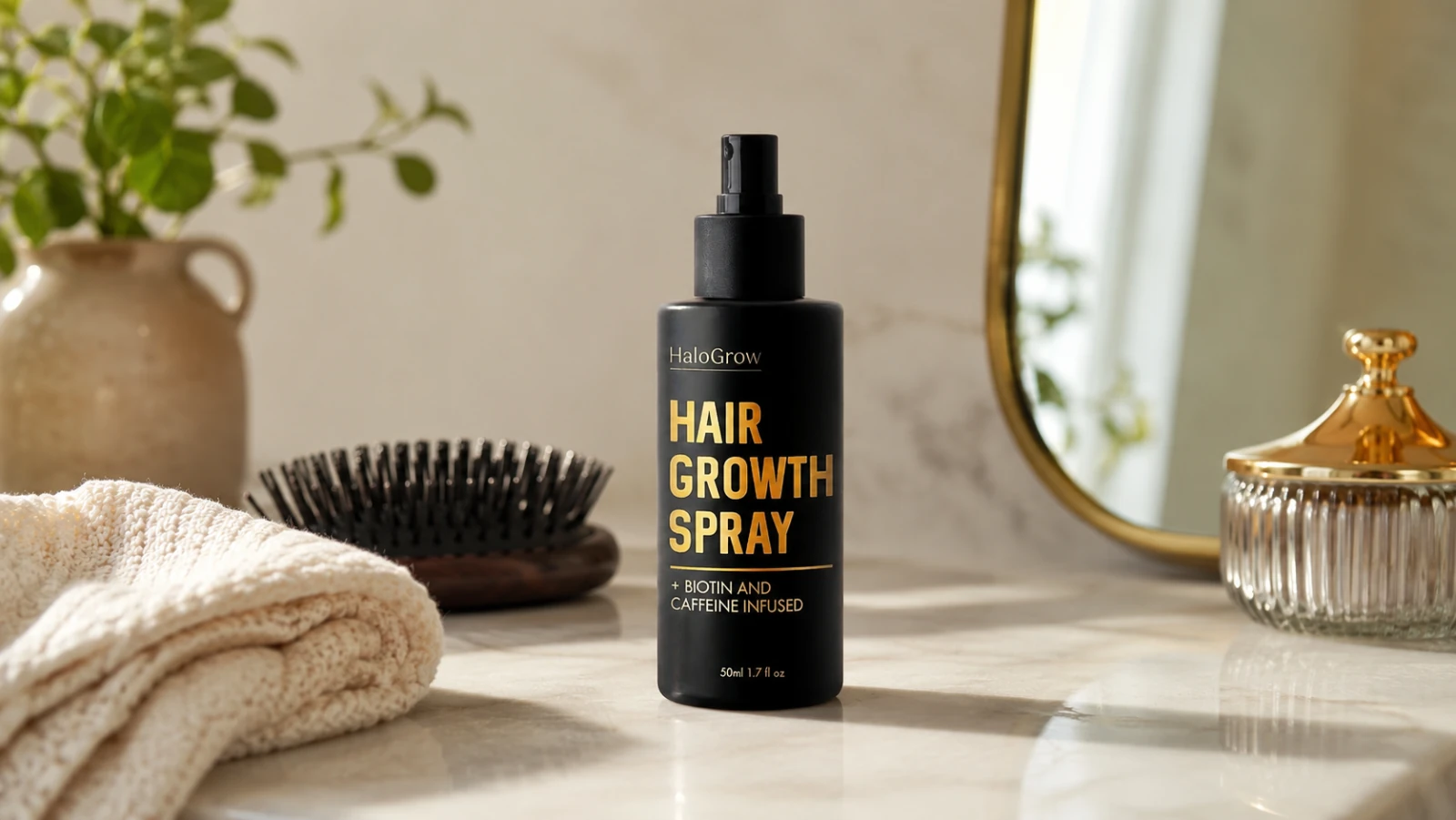
Rootara is an all-natural, lightweight scalp spray formulated with biotin, caffeine and botanical hair-supporting ingredients.
Unlike ordinary styling sprays, it is not designed to create temporary hold or artificial volume.
It is applied directly to the scalp, where every strand begins.
The product was created around a simple idea:
Instead of focusing only on the hair above the surface, support the scalp and follicles beneath it.
Rootara is designed to help counter the effects of DHT, reduce visible shedding and support new hair growth in areas that appear thin.
What caught my attention most was how practical it seemed.
I could apply it directly around my temples, along my part and at the crown.
The formula was lightweight and non-greasy, so I could leave it in without ruining my hairstyle.
And the entire routine took less than a minute.
After everything I had tried, this finally felt like a genuinely different approach.
Why Rootara Felt Different From Everything Else I Had Tried
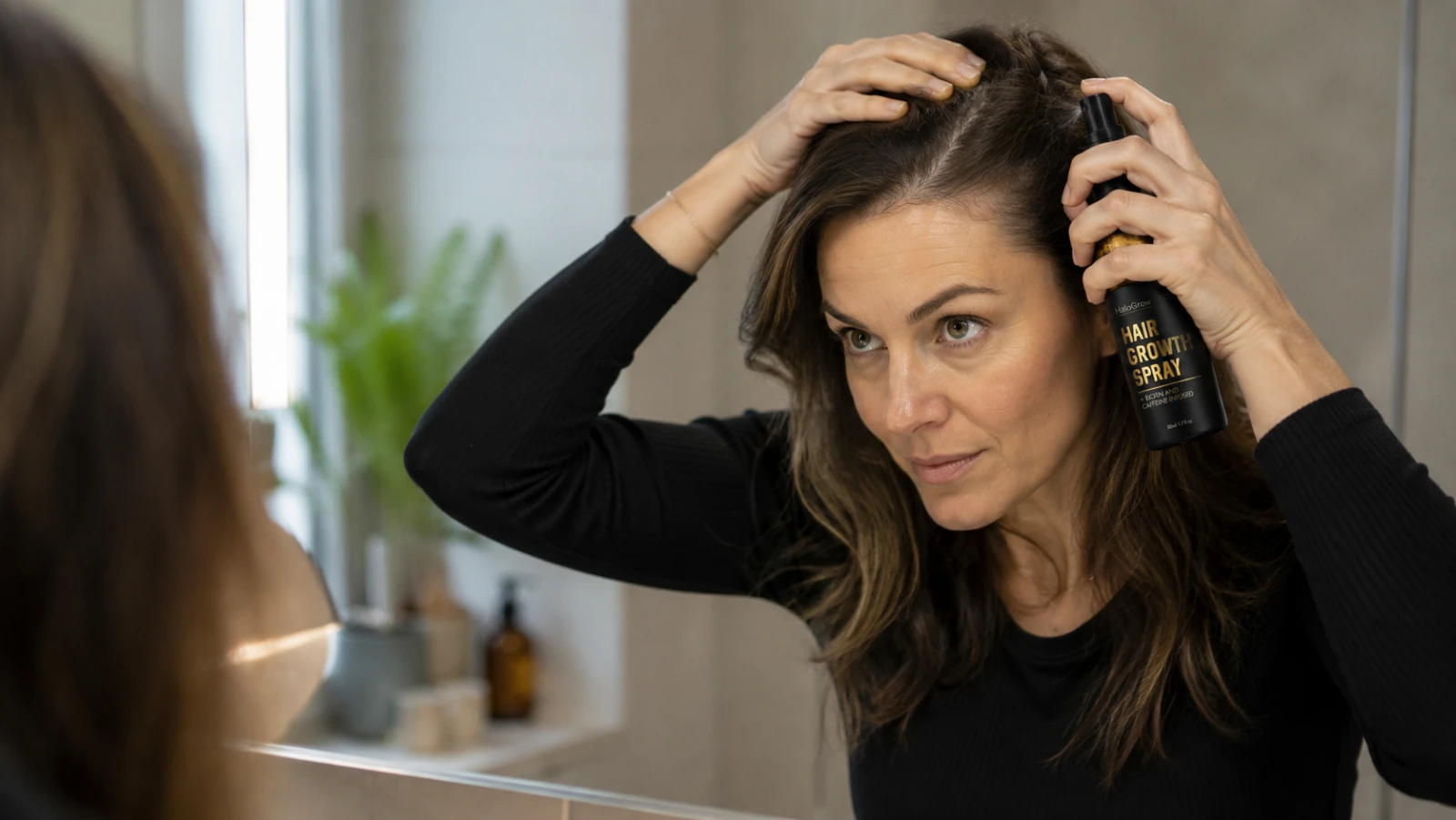
It Targets the Effects of DHT Directly at the Scalp
Most of my old products focused on the visible strands.
Rootara was designed to be applied directly to the scalp, where DHT-sensitive follicles may be affected.
This direct application was the first major difference I noticed.
It Focuses on Slowing the Shedding—Not Just Hiding It
Root powders and hair fibers helped me hide the problem for a day.
They did not make me feel that the underlying situation was changing.
Rootara was created to support the hair-growth environment and help reduce the excessive shedding that can make hair appear progressively thinner.
It Supports New Growth in Thinning Areas
I was not looking for another product that made my existing strands feel slightly thicker.
I wanted to see signs of new growth around the areas that worried me most.
Rootara was designed to support weakened follicles and encourage the appearance of fine new hairs in thinning areas.
It Combines Nutrients With Botanical Ingredients
Rootara does not rely on only one popular ingredient.
Its formula combines biotin, caffeine and botanical extracts selected to support the scalp, strengthen the appearance of the hair and encourage healthier-looking growth.
It Is Lightweight Enough to Use Every Day
Consistency matters with any hair routine.
A product may sound impressive, but it is difficult to keep using if it leaves the hair greasy, stiff or difficult to style.
Rootara felt light, absorbed easily and fit into my routine without forcing me to change everything else.
Why I Wanted a Natural Alternative
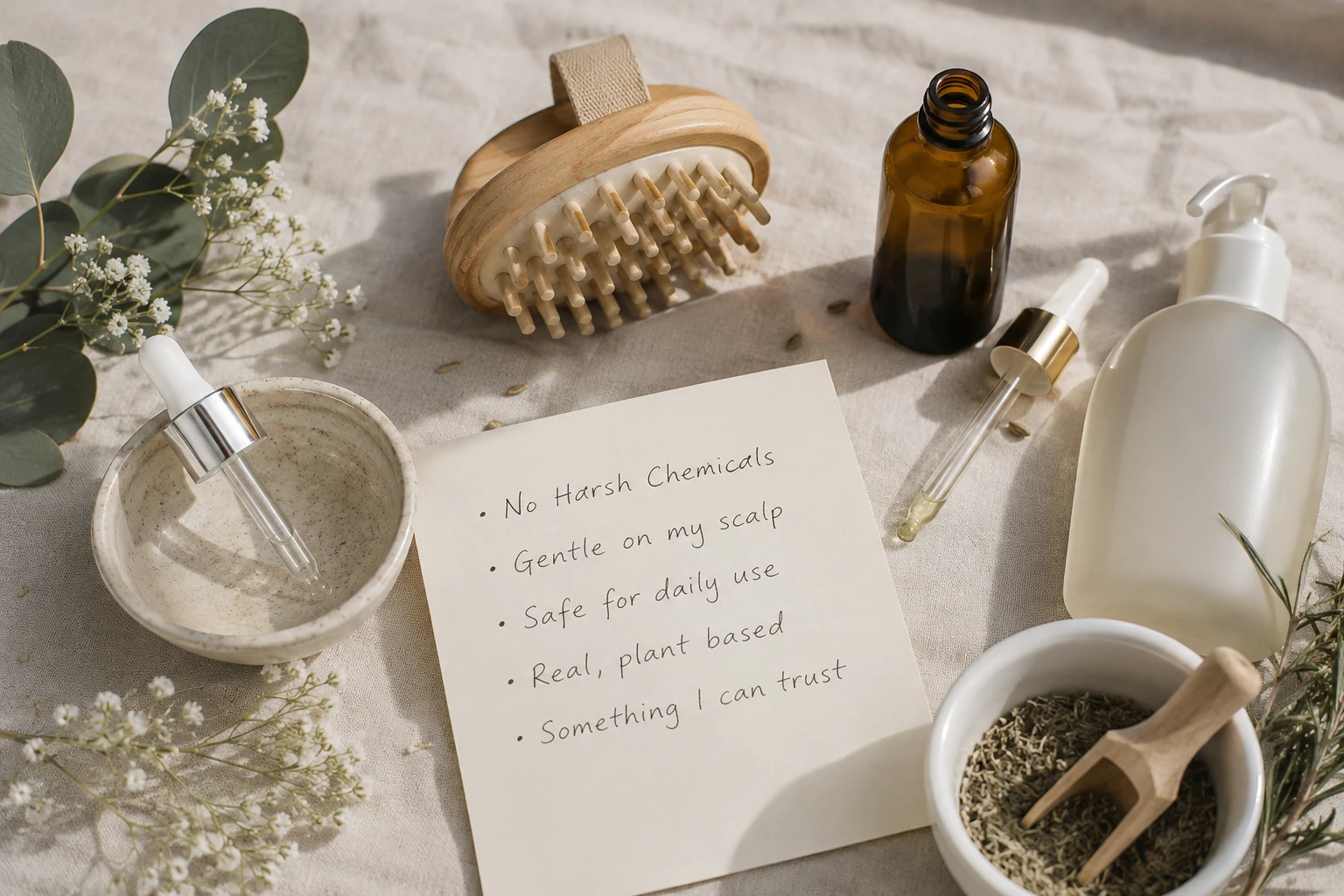
After months of supplements, heavy oils and costly products, I did not want another aggressive or complicated solution.
I wanted something that felt gentle enough to use every day, but targeted enough to address the reason my hair kept thinning.
Rootara’s natural formula appealed to me because it combined botanical ingredients with a direct-to-scalp application.
It did not feel like another temporary cosmetic cover-up.
And it did not require swallowing multiple pills or spending hours on a complicated routine.
I could simply apply it where I needed support and continue with my day.
The Ingredients That Gave Me Hope:
Biotin
Biotin, also known as vitamin B7, plays a role in the production of keratin, one of the proteins that helps form the structure of the hair.
Instead of relying only on an oral supplement, Rootara includes biotin in a topical formula applied directly to the scalp.
Caffeine
Caffeine is commonly used in scalp-care formulas and has been studied for its potential role in supporting the natural hair-growth cycle and helping counter the effects associated with DHT-sensitive follicles.
Ginger Root Extract
Ginger root has traditionally been used in botanical care and is included to help support circulation and a balanced scalp environment.
He Shou Wu
He Shou Wu is a traditional botanical ingredient commonly associated with hair and scalp support.
Together, these ingredients form a lightweight formula designed to nourish the scalp and support stronger, fuller-looking growth.
The Simple 60-Second Routine I Could Actually Stick With
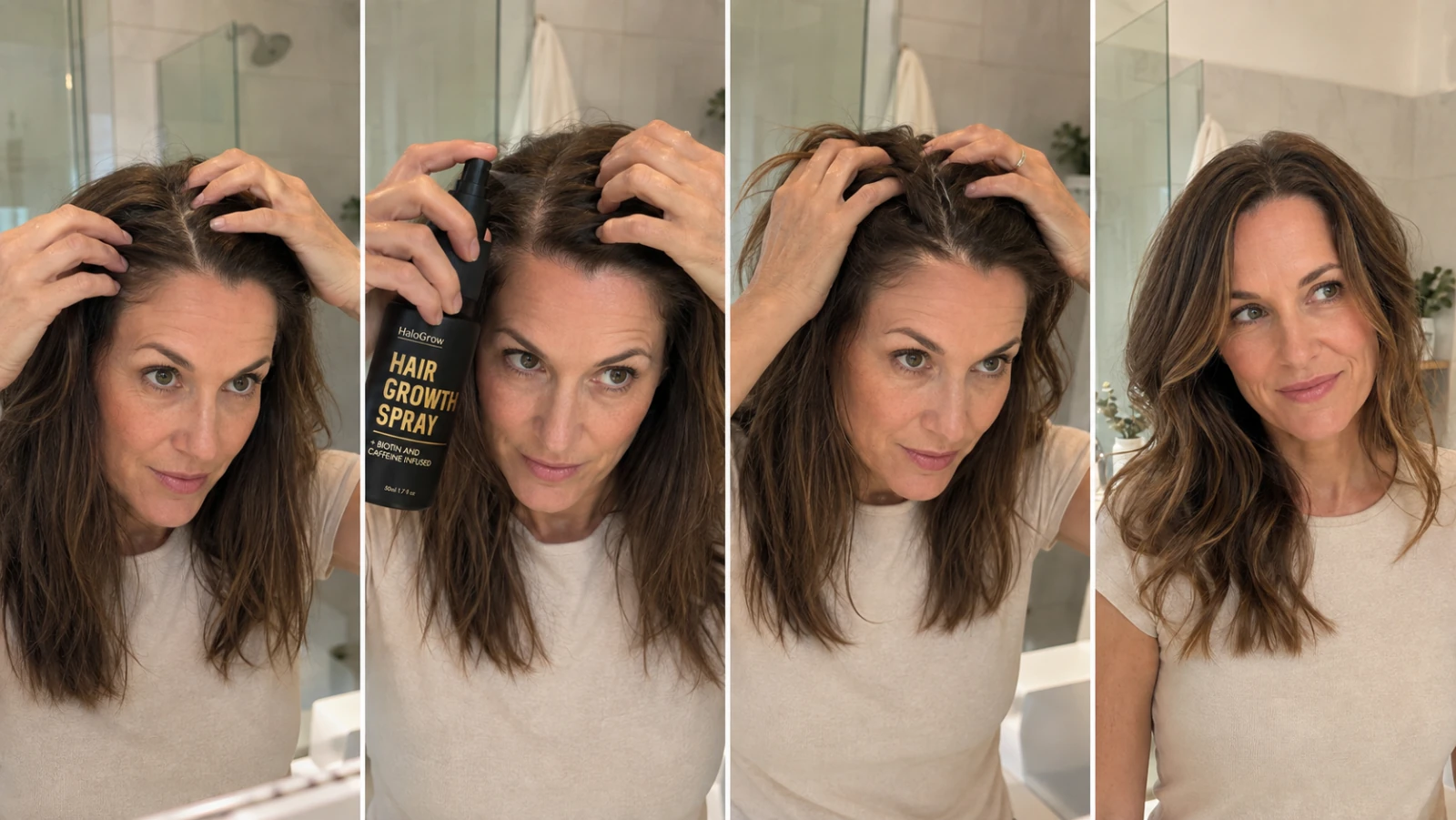
Using Rootara was easier than I expected.
Step 1: Part the Hair
I gently separated my hair to expose the areas that looked thinner.
Step 2: Spray Directly Onto the Scalp
I applied Rootara around my temples, along my part and at the crown.
Step 3: Massage the Formula Into the Roots
I used my fingertips to gently massage the spray into my scalp for one to two minutes.
Step 4: Continue With the Day
Because the formula was lightweight and non-greasy, I could leave it in and style my hair normally.
There were no complicated mixtures.
No heavy residue.
No long treatment that took over my evening.
The simplicity made it much easier to remain consistent.
What I Noticed Over the Next 8 Weeks
I knew hair would not grow back overnight.
So instead of expecting an instant transformation, I paid attention to the smaller signs of progress.
Week 2: The Shedding Started to Slow
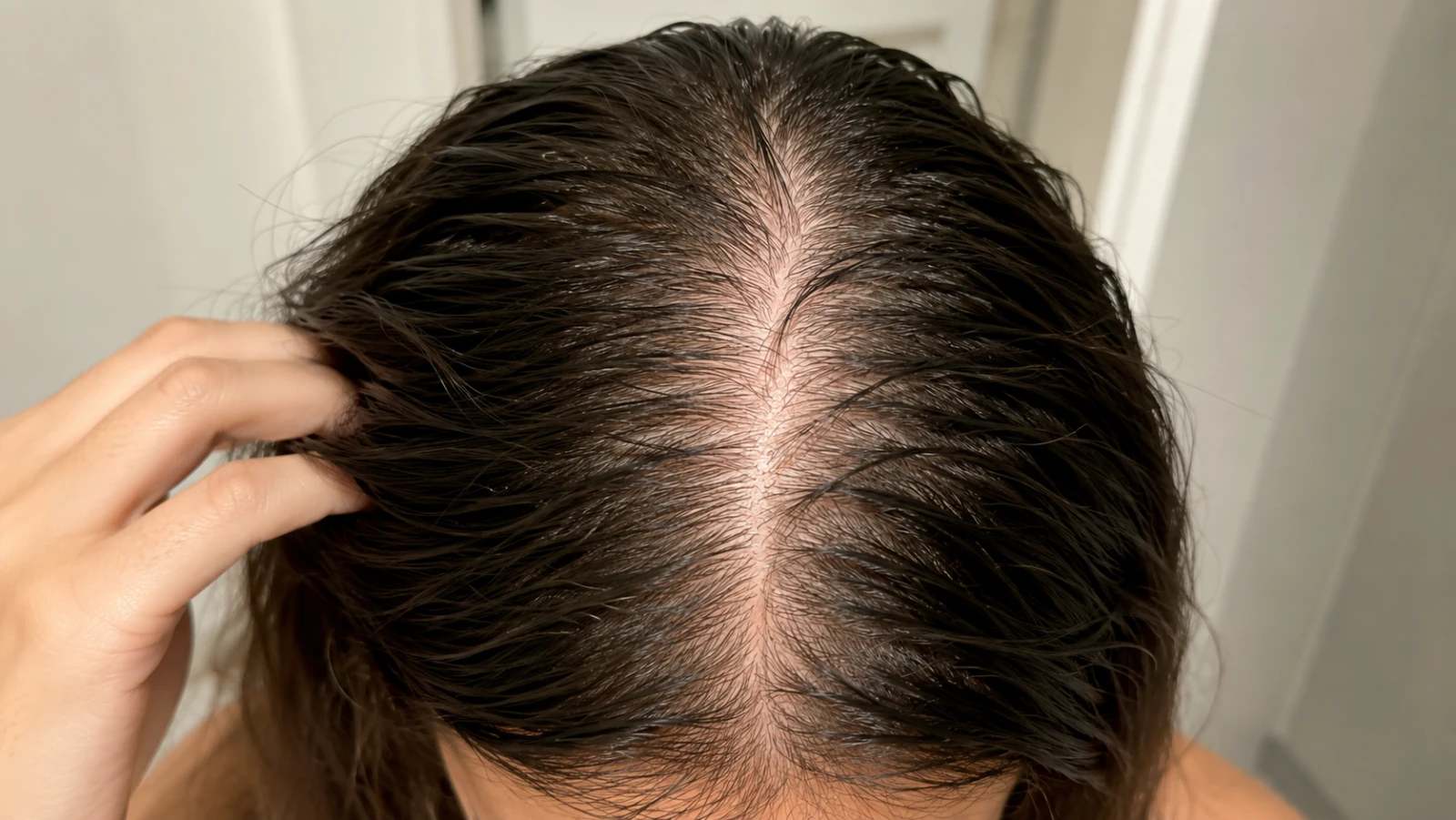
The first thing I noticed was how my hair and scalp felt.
My hair seemed softer, shinier and easier to manage.
More importantly, I began noticing fewer alarming clumps during brushing and washing.
The change was not dramatic yet, but it gave me something I had not felt in months:
Hope.
Week 4: I Was Finding Far Less Hair in My Brush and Shower
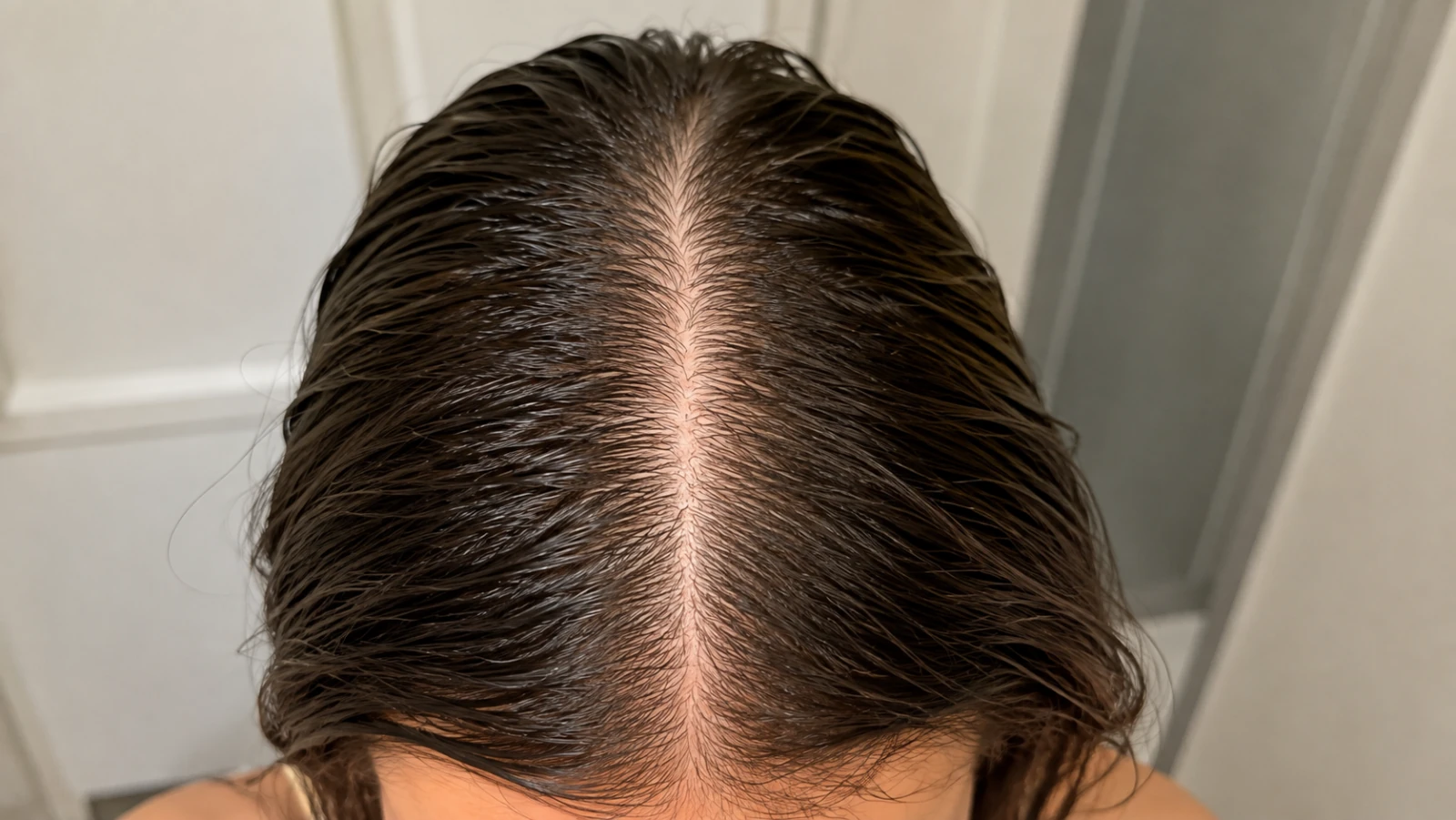
By the fourth week, the difference in shedding was much more noticeable.
There was still some hair in my brush, of course, but the amount no longer made my stomach drop.
The shower drain did not look the way it had before.
For the first time, I felt as though my hair was no longer getting worse.
That alone felt like an enormous relief.
Week 6: Fine New Hairs Began Appearing Around My Temples
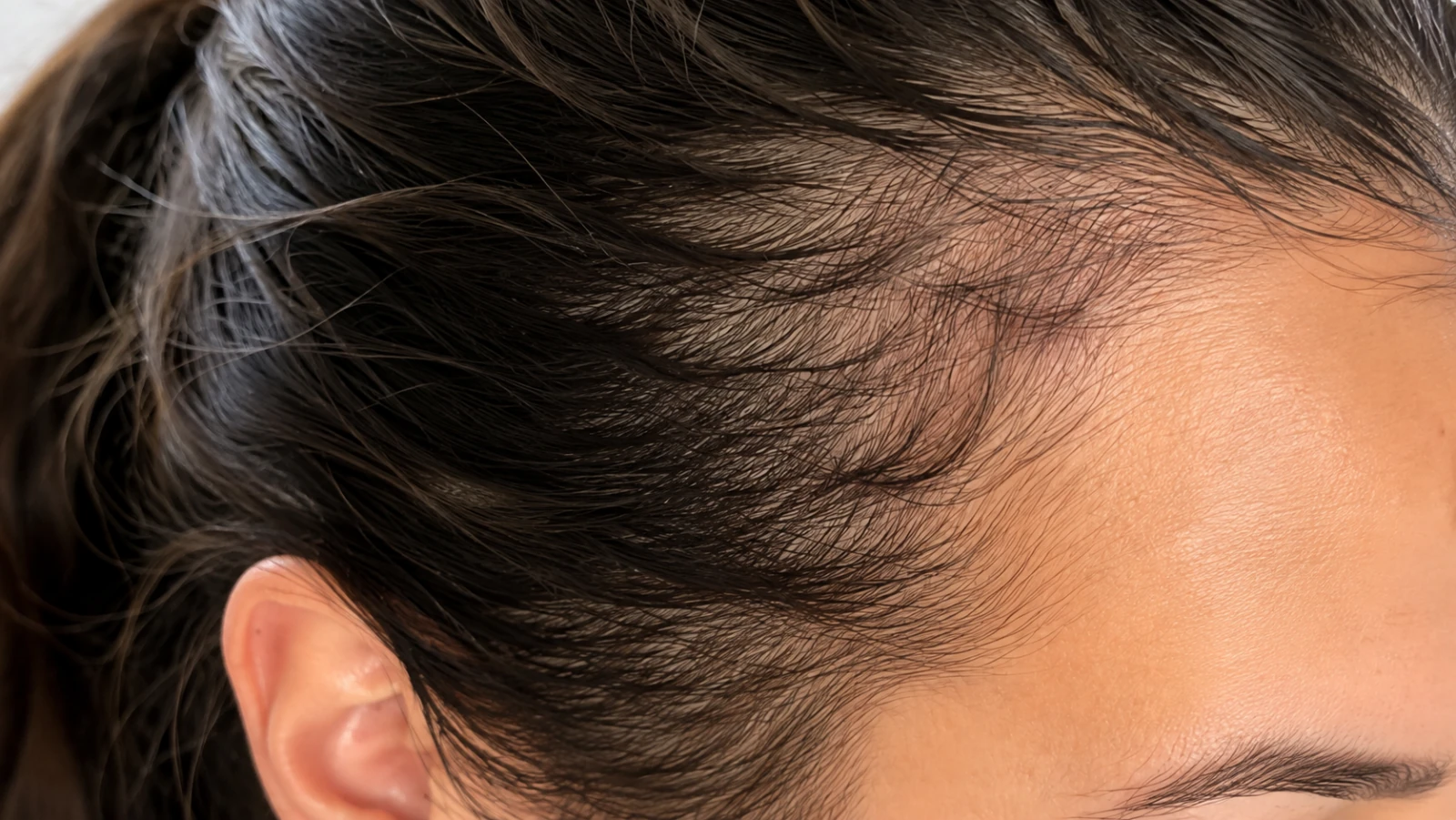
Around the sixth week, I noticed something that made me look twice.
Fine, short hairs were appearing near my temples and along areas of my hairline that had looked sparse.
They were small, but they were there.
I had spent so long trying to hide the loss that seeing signs of new growth felt almost unbelievable.
I was no longer just creating temporary volume.
I finally felt as though my hair was beginning to grow back.
Week 8: My Part Looked Fuller and My Ponytail Felt Thicker
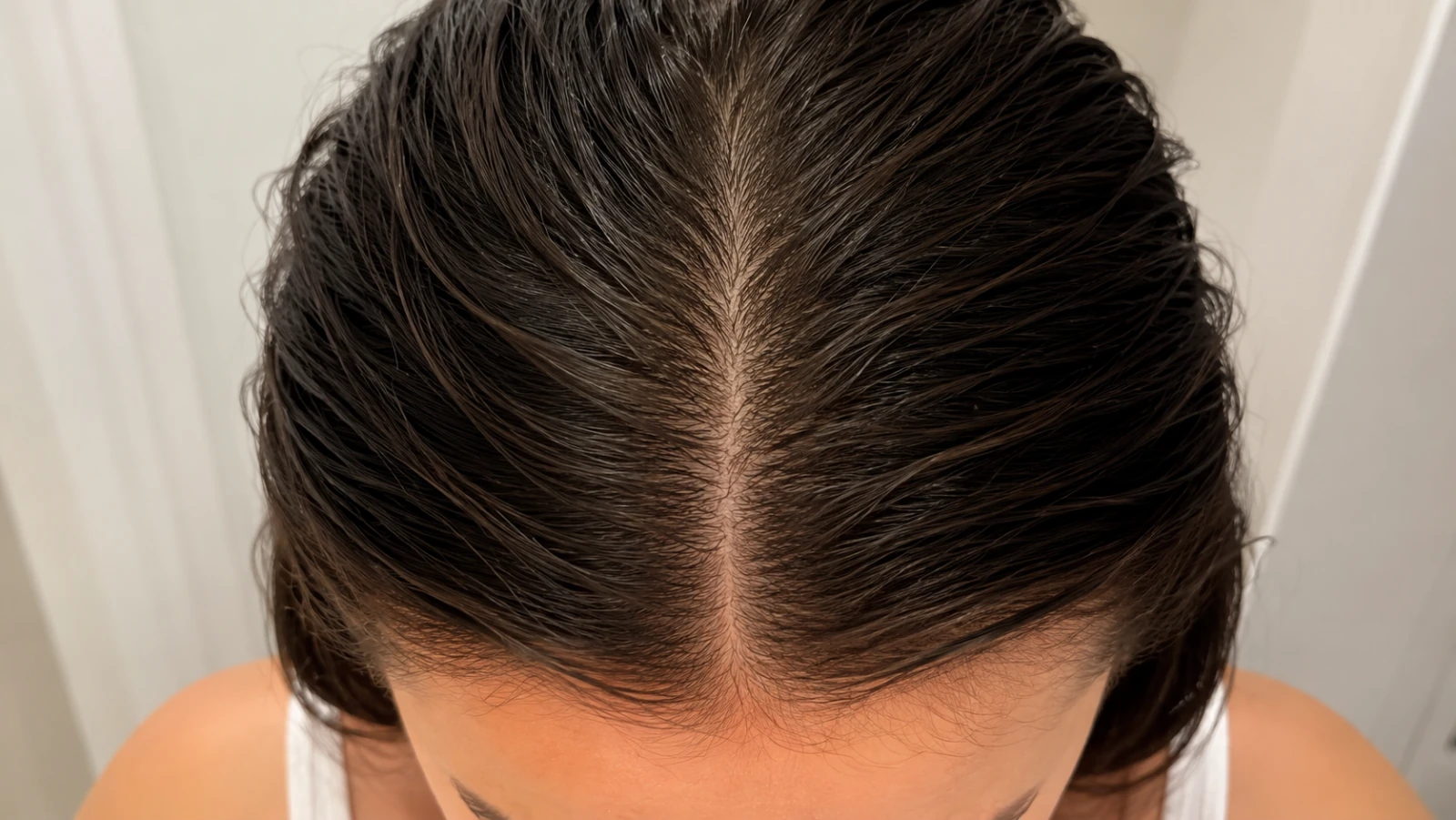
By the eighth week, the changes were much easier to see.
My part looked less noticeable.
The areas around my temples appeared fuller.
My hair felt stronger, softer and more voluminous.
Even my ponytail felt more substantial in my hand.
I still knew that hair growth takes time and that individual results can vary.
But for me, the difference was meaningful.
I was no longer looking for evidence that my hair was disappearing.
I was seeing signs that it was coming back.
For the First Time, I Felt Like I Was Growing Hair Back — Not Just Hiding the Loss
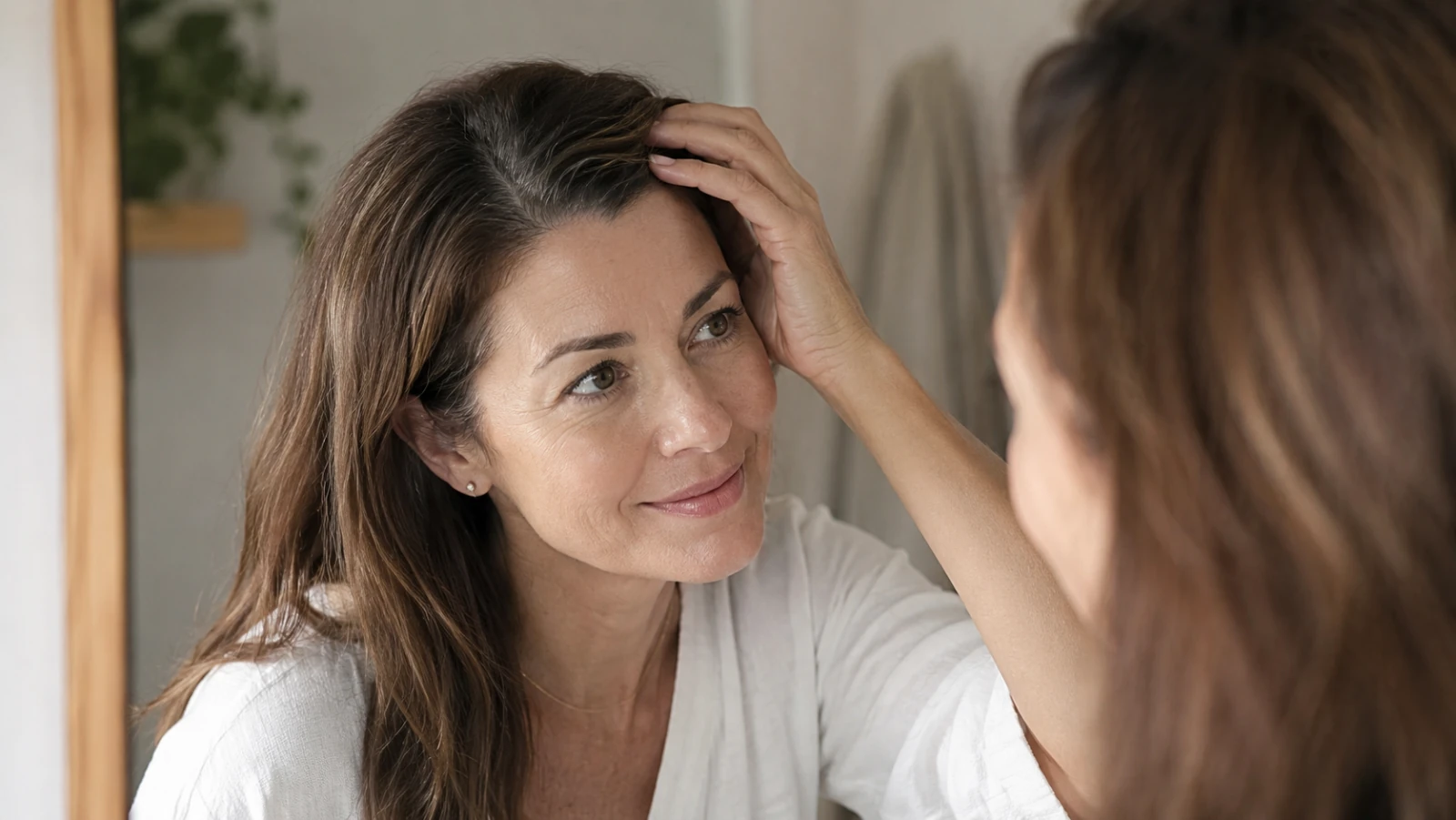
Before Rootara, almost everything I did was about concealment.
I changed my part.
I used powders.
I avoided certain hairstyles.
I checked the lighting before photographs.
I worried whenever the wind moved my hair.
But hiding the problem never made me feel better for long.
The biggest difference with Rootara was the feeling that I was finally supporting new growth rather than simply covering what I had lost.
The physical changes mattered.
But the emotional change mattered just as much.
I stopped checking my part every time I passed a mirror.
I booked a haircut I had been postponing.
I wore my hair pulled back again.
I stopped trying to position myself at the edge of every photograph.
Hair is not “just hair” when it affects how you feel about your appearance, your age and your identity.
As my hair began looking fuller, I slowly began feeling like myself again.
What Other Women Said They Experienced With Rootara
Would I Recommend Rootara?
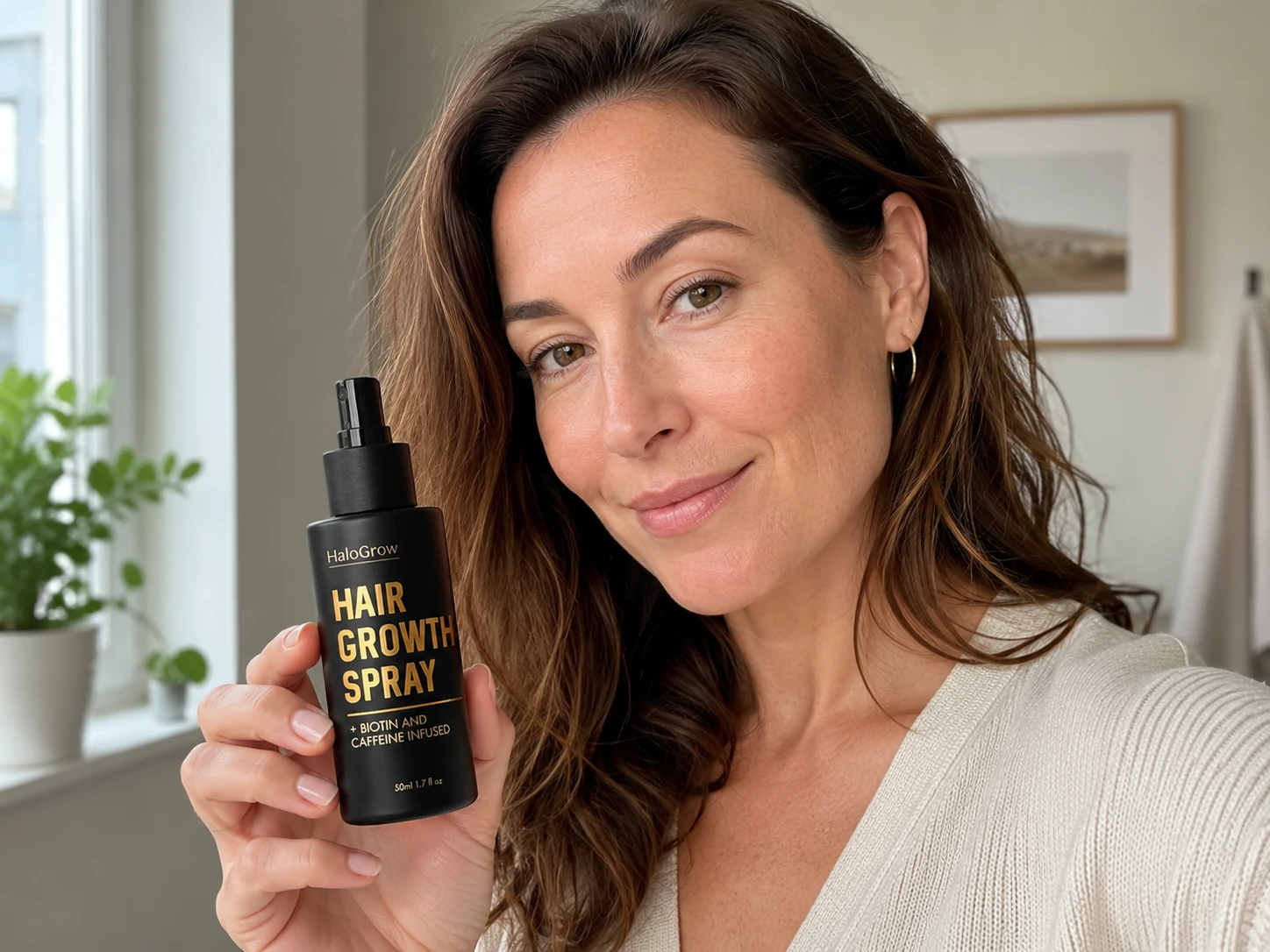
I would recommend Rootara to women who are tired of temporary solutions and want a more targeted approach.
It is not a root powder that disappears after the next wash.
It is not a styling spray that creates artificial volume for a few hours.
And it is not another complicated routine that is difficult to maintain.
Rootara is a natural scalp formula designed to target the effects of DHT, help slow excessive shedding and support visible new growth in thinning areas.
I especially appreciated that it could be applied directly where I needed it without leaving my hair greasy.
For me, it did more than improve the appearance of my existing hair.
It helped me feel as though I was finally moving in the right direction.
Where I Ordered Rootara
Rootara is available through the official website.
At the time of publication, new customers may qualify for a promotional discount of up to 70%, depending on current availability.
Ordering through the official website also ensures that the purchase is covered by the company’s 30-day satisfaction guarantee.
Check Availability and Claim Up to 70% Off Rootara Today
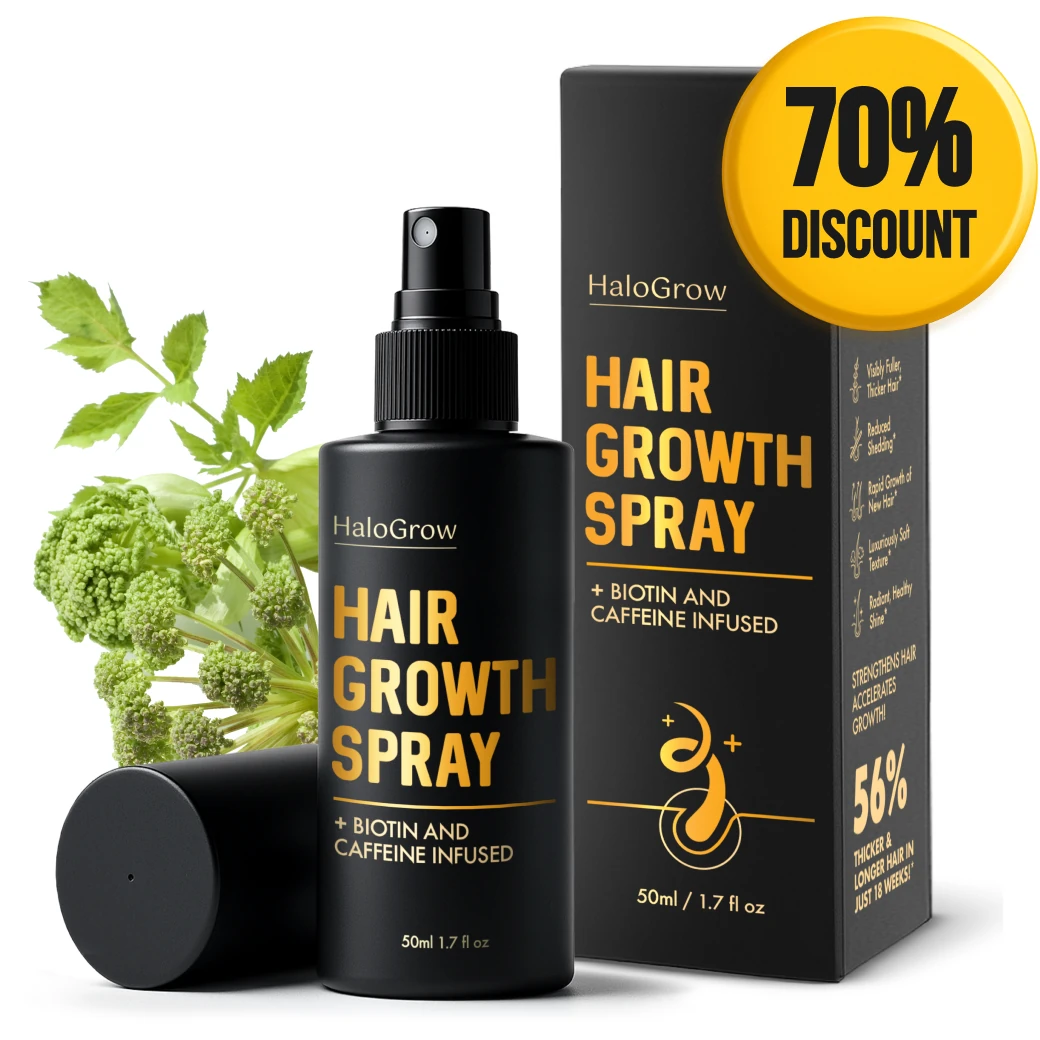
This limited-time offer is valid until 03.11.2026 – don’t miss your chance!
Apply your 70% discount today
THIS IS AN ADVERTISEMENT AND NOT AN ACTUAL NEWS ARTICLE,
BLOG, OR CONSUMER PROTECTION UPDATE
MARKETING DISCLOSURE: This website promotes certain
products. As such you should know that the owner has a
monetary connection to the product and services
advertised on the site. Rest assured, we only state what
we believe in.
ADVERTISING
DISCLOSURE: This website and the products & services
referred to on the site are advertising marketplaces.
This website is an advertisement and not a news
publication. Photographs of persons used on this site
are the brand’s material or the actual product users
HEALTH DISCLAIMER: This website is not intended to
provide medical advice or replace medical advice and
treatment from your physician. Rootara™ does not intend
to diagnose, treat, cure or prevent any disease and does
not constitute medical advice. Visitors are advised to
consult their own doctors or other qualified health
professional regarding the treatment of medical
conditions. This site offers health, wellness, fitness,
and nutritional information and is designed for
educational purposes only. Do not disregard, avoid or
delay obtaining medical or health-related advice from
your health-care professional because of something you
may have read on this site. The use of any information
provided on this site is solely at your own risk. The
author may share his or her personal experience which
does not intend to override any medical authorities’ or
recommendations. The U.S. Food and Drug Administration
has not evaluated the statements on this website. The
information is not intended to diagnose, treat, cure, or
prevent any disease.